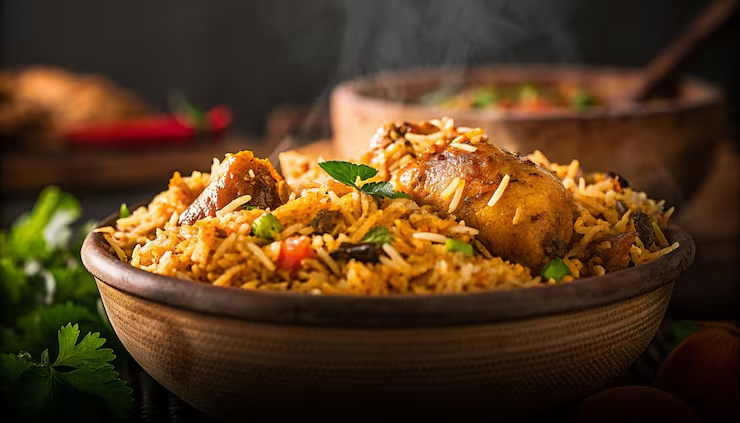
Biryani is a South Asian rice dish built by layering: par-cooked basmati is stacked with marinated meat or vegetables, saffron, fried onions, and whole spices, then sealed and slow-steamed so every grain finishes in the marinade’s juices. That layering-and-steaming technique — not any one ingredient — is what separates biryani from a pilaf or “chicken with rice.” It’s also the dish guests drive the farthest for at Sonny’s Indian Kitchen in Chatham, NJ.
The One-Paragraph Answer
A true biryani is cooked twice. First the rice is boiled until just underdone; separately, the meat or vegetables marinate and partially cook in yogurt and spices. Then the two are layered in one pot with saffron and fried onions and finished on low steam — a method called dum — so the rice absorbs flavor without turning mushy. The test of a good biryani is separation and aroma: every grain distinct, the saffron unmistakable, the meat tender enough to fall apart under a spoon.
Hyderabadi, Lucknowi, Sindhi: The Styles, Briefly
- Hyderabadi: the most famous restaurant style. In the kacchi version, raw marinated meat and rice cook together under a sealed lid, producing a fiery, deeply infused biryani with mint and fried onion.
- Lucknowi (Awadhi): the gentler northern cousin. Meat is cooked first in a fragrant stock, so the result is subtler and more perfumed than spicy.
- Sindhi: the boldest home style, from the Sindh region — generous whole spices and a tangy edge from yogurt in the marinade, heavier on aromatics than sweetness.
- Homestyle: what most Indian families actually make on a Sunday — the same layering idea, adjusted to the household’s spice drawer and patience. Less theatrical, deeply comforting.
How We Make Ours
Our biryanis are Sindhi-style: slow-cooked fragrant basmati layered with saffron, whole spices, and a yogurt-marinated protein, served with cooling cucumber raita on the side. It arrives as a complete meal in one container, which is why it’s the most-ordered takeout dish for solo dinners — and why our catering trays of biryani (each feeds 10-12) anchor so many party spreads. Read more on the chicken biryani dish page, or plan quantities with the catering portions guide.
The Six Biryanis on Our Menu
- Sindhi Chicken Biryani ($19): the classic — tender chicken, saffron, whole spices.
- Sindhi Vegetable Biryani ($17): the same technique with seasonal vegetables; it’s dairy-free.
- Sindhi Lamb Biryani ($21): boneless lamb in slow-cooked saffron basmati.
- Sindhi Goat Biryani ($21): bone-in goat, the connoisseur’s pick — the bones deepen the flavor.
- Sindhi Shrimp Biryani ($25): shrimp layered with saffron and whole spices.
- House Special Biryani ($25): the full house — prawns, chicken, and lamb in one pot.
All our meat is halal, and most biryanis can be adjusted mild, medium, or hot when you order online. See the full menu for the rest of the table.
Is Biryani Spicy? And Other Ordering Notes
Ours is aromatic rather than hot by default: cardamom, clove, and saffron lead, and the raita alongside cools whatever heat there is. One biryani generously feeds one very hungry person or rounds out a shared table for two alongside a curry and naan. Since we’re BYOB, a crisp lager or Riesling is the classic pairing.
Biryani Near Chatham, Madison, and Summit
We make our biryanis fresh at 225 Main St in downtown Chatham — about 5 minutes from Madison and 10 from Summit, with delivery and pickup across the area. Order for tonight, or put a tray at the center of your next catered event.